|
|
Hypnotherapy to Support Dementia Carers
Caring for a partner, parent or other relative with dementia can create prolonged emotional and practical pressure. As memory, behaviour, communication and independence change, carers may experience anxiety, stress, frustration, guilt, sleep disturbance, grief and exhaustion. The relationship itself may also change, sometimes over many years, while responsibilities for care, safety, finances and future planning increase. Therapy can help carers manage these emotional demands, process difficult experiences and cope more effectively with the continuing changes associated with dementia and similar degenerative brain conditions such as MND, ALS and Parkinson's.
How hypnotherapy can help dementia carers?
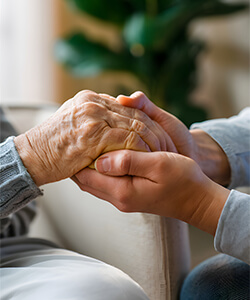 Supporting someone with dementia can be emotionally demanding, particularly as their memory, behaviour, judgement and independence change. You may find yourself dealing with anxiety, frustration, guilt, disturbed sleep, grief and a growing sense of responsibility. Therapy can help you manage these responses, process difficult experiences and maintain your own wellbeing as the caring situation develops. Supporting someone with dementia can be emotionally demanding, particularly as their memory, behaviour, judgement and independence change. You may find yourself dealing with anxiety, frustration, guilt, disturbed sleep, grief and a growing sense of responsibility. Therapy can help you manage these responses, process difficult experiences and maintain your own wellbeing as the caring situation develops.
I also understand many of these pressures from personal experience. My mother had Alzheimer's disease and eventually died as a result of the condition. I was the primary organiser of her care and later acted as executor of her estate. I therefore have first-hand experience of many of the emotional, practical and family issues that can arise as dementia progresses, through the later stages of care and into bereavement.
Bill Frost: Changing States provides individual therapy to support unpaid family carers of people with dementia, online via Zoom and in High Wycombe. Therapy may focus on reducing anxiety and stress, managing anger and frustration, processing distressing experiences, coping with guilt and anticipatory grief, improving sleep and helping you deal with difficult decisions as care needs change. Hypnotherapy may be combined with EMDR, counselling, NLP and other therapeutic approaches according to your individual needs. Hypnosis is not used to minimise what you are experiencing or persuade you to continue caring beyond what is safe or manageable. You remain in control of your decisions throughout the process. The aim is to support your emotional wellbeing and help you make appropriate choices for yourself and the person you care for. You can book an appointment or contact Bill Frost at Changing States to discuss your needs.
What can therapy help with?
- Anxiety about what may happen next
- Persistent stress and feeling constantly on alert
- Anger, irritation and frustration
- Guilt about your thoughts, feelings or decisions
- Difficulty switching off or sleeping
- Anticipatory grief as the person gradually changes
- Distress following aggression, accusations or difficult incidents
- Loss of the relationship as you previously knew it
- Difficult decisions about care, safety or residential placement
- Bereavement after the person dies
What happens during therapy?
We first identify the areas creating the greatest emotional pressure. Therapy may then focus on reducing anxiety, changing unhelpful patterns of thought, processing difficult experiences and developing more manageable emotional responses.
Hypnotherapy can be used to encourage relaxation and reduce persistent tension. Counselling may help you deal with grief, guilt, resentment or difficult decisions. EMDR may be appropriate where particular incidents have been especially distressing or traumatic.
Sessions are collaborative and paced according to your needs. You remain in control at all times and do not have to discuss anything before you are ready.
Can I talk about thoughts I feel guilty about?
Yes. Long-term caring can generate feelings that are difficult to admit, including anger, resentment, wanting the situation to end or feeling relief at the possibility of residential care. These feelings can exist alongside love, loyalty and concern for the person you are caring for.
Therapy provides a confidential place to talk about these reactions without judgement and to understand the pressures behind them.
More about caring for someone with dementia
What is dementia?
Dementia is a general term for a group of conditions that cause progressive changes in memory, thinking, communication, judgement and everyday functioning. It is different from ordinary age-related forgetfulness and usually becomes more noticeable as the condition progresses.
Common forms include Alzheimer's disease, vascular dementia, dementia with Lewy bodies, frontotemporal dementia and mixed dementia. Different forms can produce different patterns of memory, behaviour and physical change.
What changes might I notice?
Dementia can affect much more than memory. Depending on the type and stage, you may notice:
- Repeated questions or conversations
- Confusion about time or place
- Difficulty finding words
- Poorer judgement or decision-making
- Changes in personality or behaviour
- Suspicion or false accusations
- Agitation or irritability
- Sleep disturbance
- Difficulty recognising familiar people
- Increasing dependence on others
What is the "long goodbye"?
Family carers sometimes describe dementia as a long goodbye because the person and relationship change gradually over months or years.
This can create anticipatory grief, where you begin grieving before the person's death, and ambiguous loss, where the person is physically present but important parts of the relationship or person have changed or disappeared.
You may grieve the loss of conversations, shared plans, independence, intimacy or the role the person previously had in your life. These losses can happen repeatedly as dementia progresses. Over time, more and more of the familiar person and relationship you knew may gradually be lost.
How can dementia affect the carer?
Caring responsibilities can gradually take over large parts of everyday life. You may become responsible for appointments, medication, finances, personal care, supervision and decision-making while also coping with changes in the relationship itself.
- Chronic stress and tiredness
- Anxiety and constant vigilance
- Sleep problems
- Social isolation
- Loss of personal time
- Changes in family relationships
- Financial pressure
- Resentment followed by guilt
- Physical and emotional exhaustion
Why does someone with dementia sometimes say things that are clearly untrue?
A person with dementia may describe events that did not happen, accuse someone of stealing or insist that something is true despite evidence to the contrary. This does not necessarily mean they are deliberately lying.
Memory gaps, confusion and changes in reasoning can cause the brain to create an explanation that feels completely real to the person. This is sometimes called confabulation.
Repeatedly correcting the person may increase distress without changing what they believe. In many situations it is more helpful to respond to the emotion behind what they are saying rather than trying to win an argument about the facts.
What if they become angry, suspicious or aggressive?
Dementia can sometimes lead to shouting, accusations, aggression, paranoia, refusal of care or other behaviour that is distressing for family members.
These changes may arise from confusion, fear, pain, frustration, overstimulation or changes within the brain. A sudden change in behaviour or confusion should be medically assessed because physical illness, infection, dehydration or medication effects may also be involved.
Being repeatedly accused, shouted at or rejected can have a significant emotional effect on the carer, even when you understand that dementia is contributing to the behaviour.
What happens in the later stages of dementia?
As dementia becomes more advanced, the person may need increasing help with washing, dressing, eating, mobility, medication and continence. Communication may become limited and they may no longer recognise familiar people.
Some carers eventually reach a point where care at home is no longer safe or sustainable. Residential or nursing care may then need to be considered. This decision can produce considerable guilt, particularly if you previously promised that the person would always remain at home.
Needing professional care does not mean that you have stopped caring. The person's needs may simply have reached a level that one family member can no longer safely provide.
What if they no longer recognise me?
Loss of recognition can be particularly painful for partners and close relatives. A person may forget your name or relationship while still responding to your voice, manner, touch or general sense of familiarity.
This can create another stage of grief for the carer. Therapy may help you process the loss without expecting you to deny how difficult it feels.
What practical decisions may arise?
Family carers may eventually become involved in decisions about finances, personal care, medication, professional carers, residential care and future medical treatment. I encountered many of these issues while organising my mother's care and later dealing with her affairs after her death.
The legal arrangements differ between countries. In England and Wales, examples include Lasting Powers of Attorney for Property and Financial Affairs and for Health and Welfare, care needs assessments and carer's assessments. Depending on where you live in the UK, financial support may include Attendance Allowance or, in Scotland, Pension Age Disability Payment. ReSPECT planning and DNACPR recommendations may become relevant during serious illness or later-stage dementia.
These decisions should be discussed with the appropriate medical, legal or social-care professionals rather than being carried by one family member alone.
What happens when end-of-life decisions arise?
Advanced dementia can eventually raise questions about hospital treatment, infections, eating and swallowing difficulties, resuscitation and the person's preferred place of care.
These decisions can be emotionally demanding, particularly when the person can no longer express their own wishes. Medical teams should consider previously expressed preferences, existing advance plans, the person's current circumstances and the relevant legal framework.
The carer may experience sadness, doubt, guilt and sometimes relief as the person's condition deteriorates. These responses can become part of the therapeutic work.
What if I sometimes wish it would end?
Some carers reach a stage of exhaustion where they find themselves wishing that the illness, the caring situation or the person's suffering would end. Having such thoughts does not necessarily mean that you intend harm.
They can reflect prolonged stress, grief and exhaustion. Being able to discuss them openly may reduce guilt and help you recognise when you need more support.
What happens after the person dies?
Bereavement following dementia can be complicated by the fact that grieving may have started years earlier. Some carers experience intense sadness, while others initially feel relief that the person is no longer suffering or that the demands of caring have ended.
Having gone through this process myself, including the responsibilities that continued after my mother's death, I am aware that the caring role does not always end neatly at the point of bereavement. Executor responsibilities, house sale and clearance tasks all take their toll and can take years to resolve fully.
The loss of the caring role itself can leave a significant gap in daily life. Therapy can continue into bereavement where this would be helpful.
Hypnotherapy related dementia carer research
| Fisch, S., Brinkhaus, B. and Teut, M. (2017) 'Hypnosis in patients with perceived stress: a systematic review', BMC Complementary and Alternative Medicine, 17, 323. doi:10.1186/s12906-017-1806-0. |
| Reynaud, D. and Bruneau, L. (2022) 'Feasibility and acceptance of self-hypnosis to reduce chronic stress levels on family in-home caregivers of elderly people: protocol for the POSSAID pilot, randomised, wait-list controlled trial', BMJ Open, 12, e066749. doi:10.1136/bmjopen-2022-066749. |
| Teike Lüthi, F., Sterie, A-C., Guyaz, C., Larkin, P., Bernard, M. and Berna, C. (2025) 'Home-Based Hypnosis: A Feasibility Study for End-of-Life Patients and Their Relatives', Journal of Pain and Symptom Management, 70(1), pp. 67-79.e1. doi:10.1016/j.jpainsymman.2025.03.019. |
| Valentine, K.E., Milling, L.S., Clark, L.J. and Moriarty, C.L. (2019) 'The efficacy of hypnosis as a treatment for anxiety: a meta-analysis', International Journal of Clinical and Experimental Hypnosis, 67(3), pp. 336-363. doi:10.1080/00207144.2019.1613863. |
| Wofford, N., Snyder, M., Corlett, C.E. and Elkins, G.R. (2023) 'Systematic Review of Hypnotherapy for Sleep and Sleep Disturbance', International Journal of Clinical and Experimental Hypnosis, 71(3), pp. 176-215. doi:10.1080/00207144.2023.2226177. |
|
